
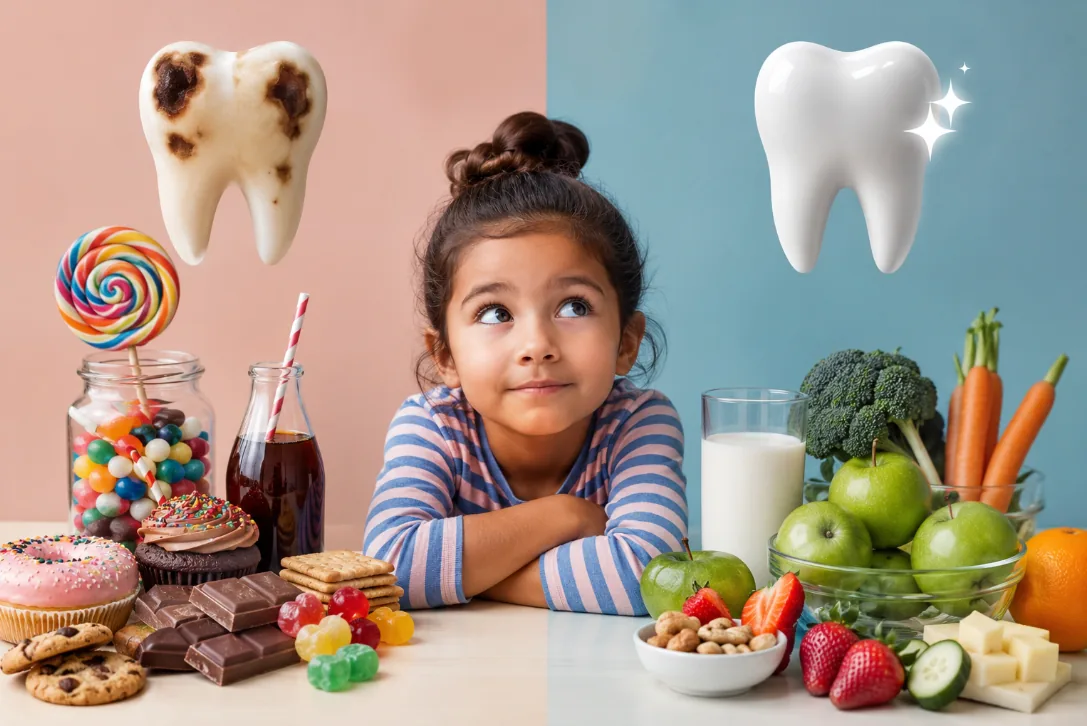
The single most important fact about sugar and kids' teeth isn't how much they eat — it's how often they consume it. This is the evidence-based diet guide to cavity prevention: how acid attacks work, where the hidden sugars hide, why the sippy cup is a culprit, the AAP's juice limits, and the snacks that actually protect teeth.
Frequency Beats Amount — The Most Important Diet Fact
If you remember one thing about diet and your child's teeth, make it this: how often your child eats sugar matters more than how much. This single fact overturns a lot of intuitive but wrong assumptions about kids' diets.
Do you know that cavity-causing bacteria ferment sugars and refined carbohydrates and excrete acid? Within minutes of a sugar exposure, the pH at the tooth surface plunges below 5.5 — the threshold where enamel starts to dissolve — and stays in that danger zone for about 20 to 30 minutes before saliva neutralizes it and begins repairing the enamel. This is a single "acid attack."
Now let us compare two children eating the same amount of sugar. Child A eats a cookie in five minutes after lunch: one acid attack, then 20–30 minutes of recovery and hours of saliva repair. Child B nibbles the same cookie's worth of crackers and sips juice across the whole afternoon: a dozen overlapping acid attacks with almost no recovery time in between. Child B's teeth spend the afternoon submerged in acid. Same sugar, dramatically different risk.
This is why the central diet strategy isn't "eliminate all sugar" — it's reduce the frequency of exposures. Cluster sweets and sugary drinks into mealtimes, and protect the long stretches between meals.
Hidden Sugars — Where They Lurk
Parents who diligently limit candy are often blindsided by where the real sugar load is hiding. Many foods marketed as healthy, natural, or kid-friendly are significant cavity risks — sometimes worse than a bar of chocolate because of how they behave in the mouth.
The usual suspects parents underestimate:
- Fruit juice and juice "drinks." Even 100% juice is concentrated sugar with the fiber stripped out. A juice box is a sugar dose; sipped slowly, it's a sustained acid attack.
- Gummy vitamins and fruit snacks. Sticky, sweet, and they cling to the chewing surfaces and between teeth. A "vitamin" that glues sugar to molars twice a day is a daily cavity risk.
- Dried fruit (raisins, fruit leather). "Natural," but extremely sticky and sugar-dense — it lodges in the grooves of the back teeth and clears very slowly.
- Crackers, pretzels, chips, and other refined-starch snacks. Starch breaks down into sugars right in the mouth, and these foods pack into the fissures and stay.
- Flavored milk, yogurt tubes, and "fruit" yogurts. Often carry as much added sugar as dessert.
- Sports drinks and flavored waters. Frequently sweetened and acidic.
The label trap: "natural" and "no added sugar" do not mean "tooth-friendly." What matters to the bacteria on a tooth is fermentable sugar and how long it stays in contact — not whether the sugar came from cane, fruit, or honey.
The Sippy Cup Trap and All-Day Grazing
The sippy cup deserves its own section because it's one of the most common and most preventable causes of early childhood decay — and because it weaponizes the frequency problem.
A toddler walking around all day with a sippy cup of milk, juice, or any sweetened liquid is, in effect, taking continuous small sugar exposures. Each sip restarts the acid-attack clock. The teeth never get the long acid-free recovery windows they need. This pattern — sometimes called "sippy cup syndrome" — produces decay on the upper front teeth and beyond, much like a bedtime bottle does.
The same logic applies to constant snacking. A child given access to crackers, fruit snacks, or a snack cup whenever they ask is grazing, and grazing keeps the mouth acidic. The goldfish-cracker-all-afternoon child is a textbook high-risk diet pattern even if no candy is involved.
The fixes are practical:
- Sippy and straw cups are for the table, not for roaming. Anything other than water should be served at a meal or snack, then put away.
- Plain water is the only acceptable all-day, in-the-cup drink. It rinses, doesn't feed bacteria, and (if fluoridated) actively helps.
- Wean off the bottle by about 12–15 months and transition off sippy cups as the child becomes able to use an open or straw cup, per pediatric guidance.
- Structure snacks into defined times rather than continuous access — two or three set snacks with water in between.
Juice Limits and Water as the Default Drink
Fruit juice is where dietary advice for kids' teeth and pediatric nutrition guidance align almost perfectly — and the AAP recommendations are clearer than most parents realize.
The American Academy of Pediatrics' policy on fruit juice is specific by age:
| Age | AAP fruit juice recommendation |
|---|---|
| Under 1 year | No fruit juice at all (unless clinically indicated) |
| 1 to 3 years | No more than 4 ounces (½ cup) per day |
| 4 to 6 years | 4 to 6 ounces per day maximum |
| 7 to 18 years | No more than 8 ounces (1 cup) per day |
The AAP's reasoning blends nutrition and dental concerns: juice offers no advantage over whole fruit (which has fiber and is eaten, not sipped), displaces milk and water, contributes to excess calories, and — for teeth — delivers free sugars in a sippable form that's easy to overconsume slowly.
The positive habit to build is simple and powerful: make plain water the default drink. Water between meals, water in the all-day cup, water as the answer to "I'm thirsty." It carries zero cavity risk, helps rinse food and acid from the teeth, and — if your community water is fluoridated — delivers ongoing low-dose fluoride. Milk at meals and limited juice with breakfast are fine; the all-day baseline should be water.